A coastal university city built for international student life.
Thessaloniki pairs the scale of Greece's second city with the warmth, affordability and everyday rhythm of a Mediterranean student destination — a supportive base for studying, living and building international connections during your degree.
A city large enough to offer everything, small enough to feel like home within a few weeks.
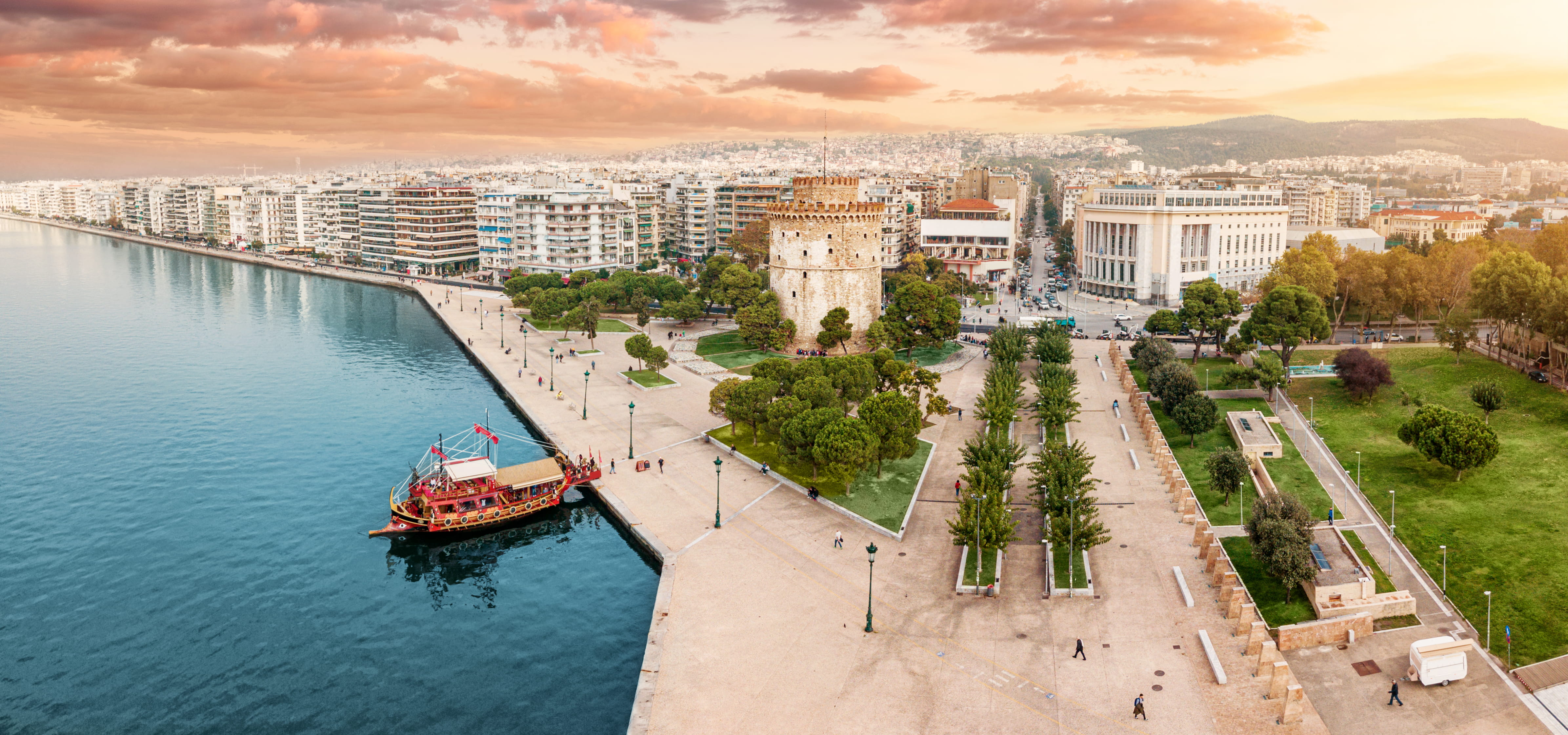
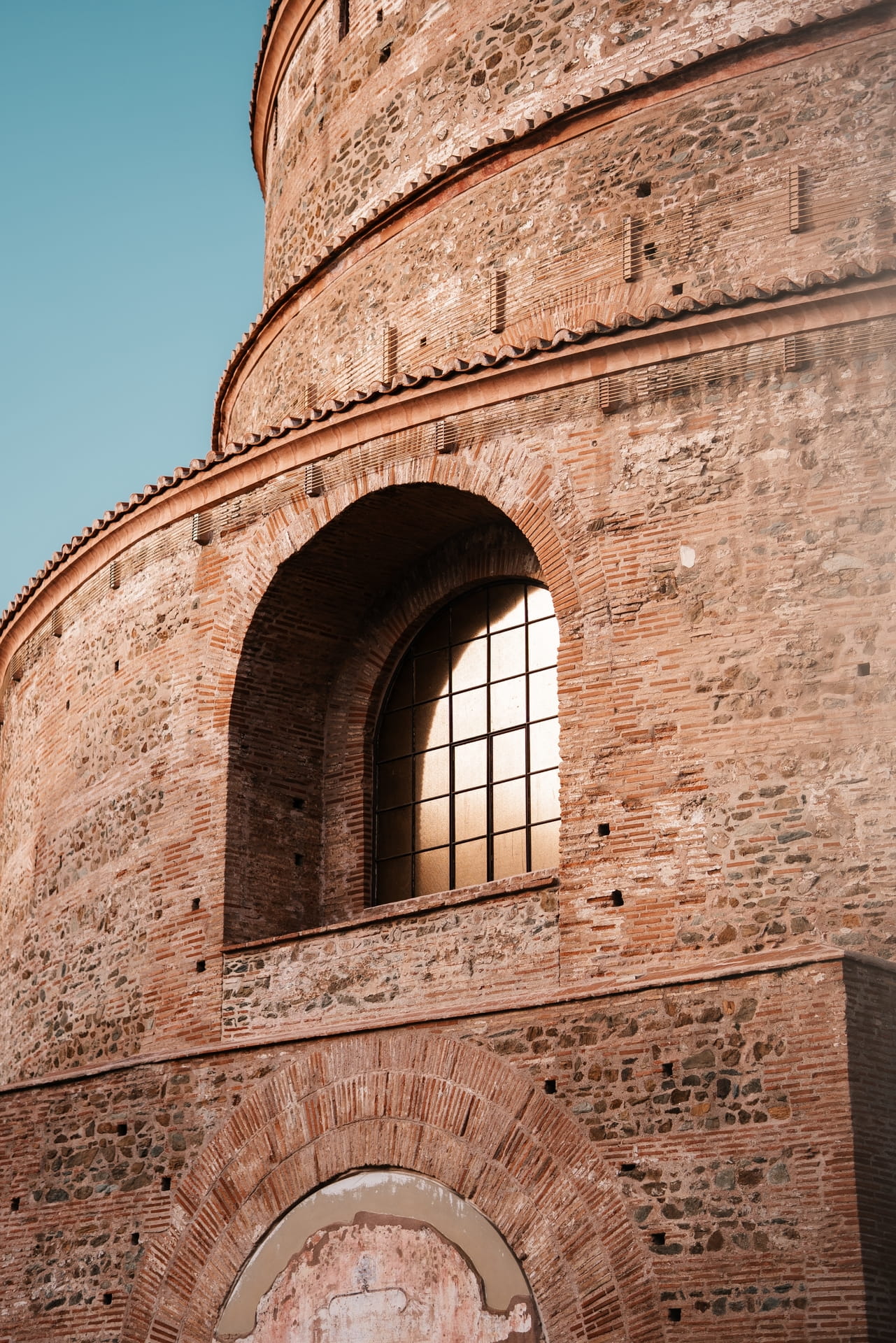
Thessaloniki sits on the Thermaic Gulf, its long seafront promenade tracing the edge of a compact, walkable centre. Layers of Roman, Byzantine and Ottoman history sit beside contemporary cafés, markets and a young, student-heavy population that gives the city its distinctive energy.
For international students, the appeal is practical as much as cultural: comparatively affordable living costs, strong air connectivity, a mild Mediterranean climate, an outstanding food scene, and a welcoming local community used to hosting students from across Europe and beyond.
Above all, it is a genuine university city. Aristotle University anchors the centre rather than sitting on its outskirts, so academic life and city life are woven together — campus, coastline and old town all within walking distance.
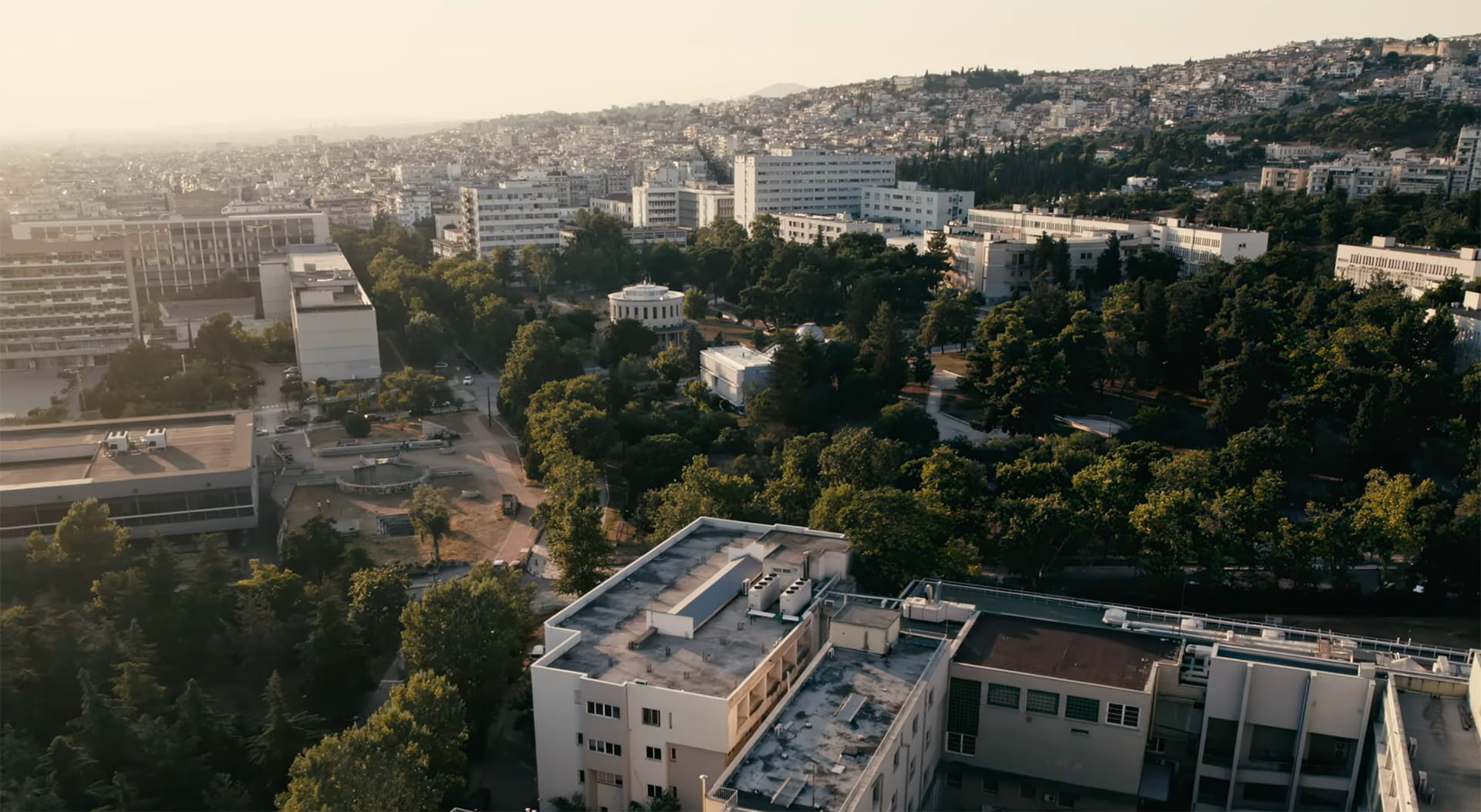 Central campus
One of Europe's more affordable student cities.
Living costs in Thessaloniki are modest by Western European standards. Many international students manage comfortably on around €600–800 a month, depending on accommodation and lifestyle. The figures below are indicative and vary with neighbourhood, season and personal choices.
Indicative figures for guidance only — actual costs depend on accommodation, location and lifestyle.
Easy to reach, easy to move through.
A compact centre, a modern public-transport network and an international airport make Thessaloniki simple to navigate and well connected to the rest of Europe.
International airport
Thessaloniki Airport (SKG) lies around 15 km from the centre, with direct connections to more than 90 destinations across Europe and beyond.
Metro & buses
The city's metro, opened in 2024, runs alongside an extensive bus network, with reduced student fares for everyday travel.
Walkable & coastal
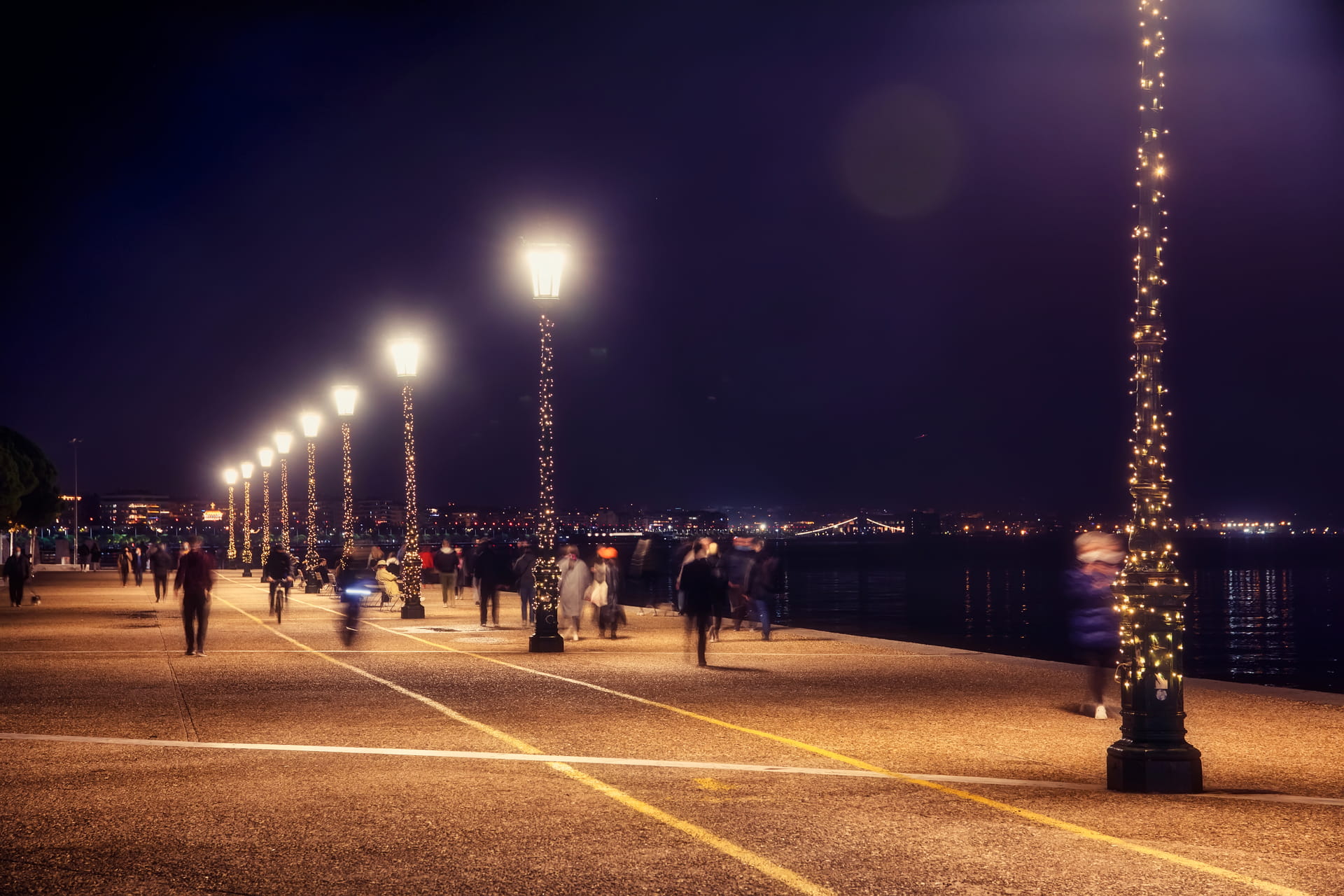
Campus, old town and seafront sit within walking distance. The renovated Nea Paralia promenade follows the waterfront for an easy daily stroll or ride.
Day trips & beaches
Halkidiki's beaches, Mount Olympus and the Pieria coast are all a short journey away — weekends out of the city are part of student life here.
Practical essentials for international students.
A short orientation to the things worth sorting in your first weeks. The University's international office can guide you through the specifics once you are enrolled.
Housing & neighbourhoods
Most students rent rooms in shared flats. The centre, Ano Poli (the old upper town) and seaside Kalamaria are popular choices — all well served by transport and close to campus.
Visas & residence permits
EU and EEA students need only register locally. Students from outside the EU should arrange a student visa before arrival and a residence permit once here; the University supports this process.
Healthcare & insurance
EU students are covered with a valid EHIC; students from elsewhere should hold health insurance for the duration of their studies. Pharmacies and clinics are easy to find across the city.
Everyday admin
Opening a local bank account, picking up a Greek SIM and registering with the University are quick to organise. English is widely understood in shops, services and on campus.
A Mediterranean city that lives outdoors, year round.
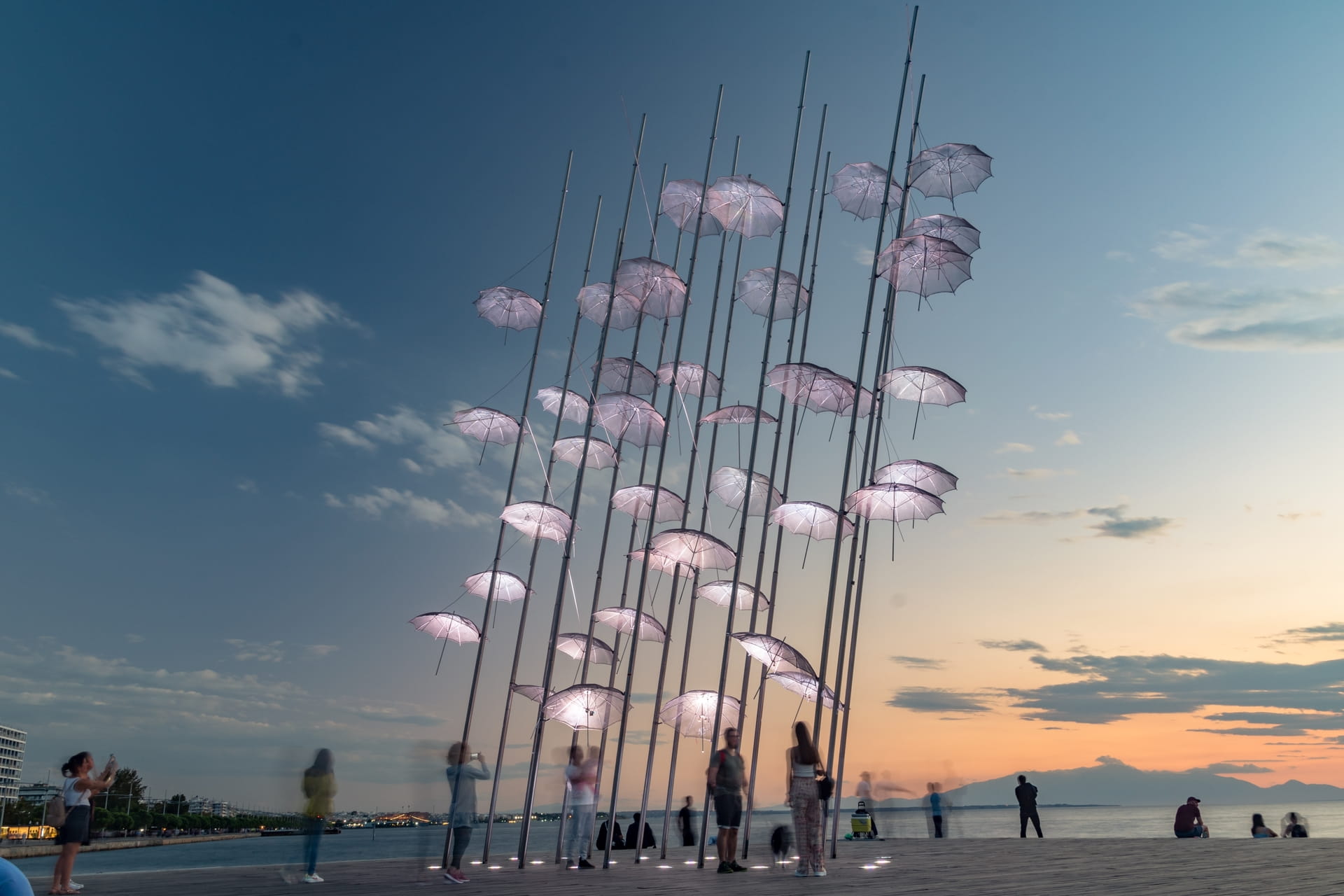
From the waterfront and the White Tower to the markets, bakeries and late-night tavernas of the old town, Thessaloniki is a city best experienced on foot. Its festivals, food and easygoing pace make it one of Greece's most rewarding places to be a student — sociable, affordable and unmistakably its own.